

The story you read to a two-year-old and the one you read to an eleven-year-old can look as if they come from different planets. One has six words on a page and a duck. The other has a twist, a map and a cliffhanger. Somewhere in between, your child changes what they need from the end of the day, and the story can change with them.
There’s no exact age for any of this. Children move at their own pace, and a ten-year-old who wants the old dinosaur book again isn’t going backwards. Think of what follows as rough seasons, not rules.
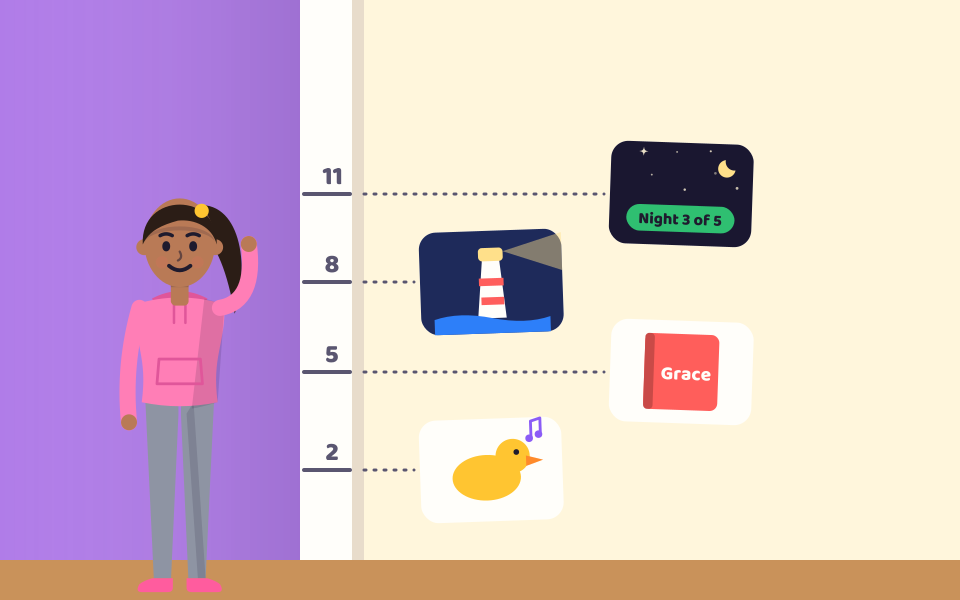
Ages 2 to 3: rhythm, rhyme and pointing
At this age, the sound of a story matters far more than the plot. Short lines, strong rhythm and rhyme give a small child something to hold on to, and repetition is the whole point. The fiftieth time through the same book is the one where they finally join in with the last word of every line.
Keep it short. A few minutes is plenty, and it’s fine to stop before the end if eyes are closing. Leave room for pointing and naming: the cat, the moon, the red bus. Hearing their own name in a story can be a small thrill at this age, so don’t be afraid to slip it in.
Most of all, a child this age is listening to you. They don’t need a performance or perfect pronunciation, just the voice they know, at the pace they know. If you read the same closing line every night, it soon becomes the signal that the day is done.
Ages 4 to 5: “Am I in this one?”
Around now, many children want to see themselves in the story. They like a hero who looks like them, a dog like theirs and a best friend who gets to come along. Stories can have a clear problem and a happy fix: a lost balloon, a sleepy crab, a door that won’t open.
This is also the age of big firsts, like starting school or a new baby in the house. A gentle story about something similar can give a child words for feelings they can’t quite name yet. Rhyme still goes down well, and so does a question at the end: what would you have done?
Ages 6 to 8: proper plots and first reading
As children start to read for themselves, bedtime can quietly become practice. Let them follow the words with a finger, read a line or two, or spot words they know. Keep it light: the story is still for pleasure, not homework.
Plots can get a little bigger now, with a mystery to solve or a moment of gentle suspense, always ending somewhere safe and warm. It’s a lovely age to try a story that carries on over a few nights, so there’s something to look forward to tomorrow.
If you ever have a worry about your child’s hearing, speech or how reading is going, their teacher, your health visitor or your GP is a good place to start.
Ages 9 to 12: still worth it
Plenty of families stop bedtime stories once a child can read on their own. It’s worth knowing that many older children still love being read to, even if they wouldn’t admit it in front of their friends. The story just needs to grow up too.
Older children tend to want longer, calmer stories with richer words and proper plots, and nothing that feels babyish. Let them choose: a mystery, an adventure, space, magic. A story that continues over several nights gives them a reason to get into bed on time. And listening with the lights off, rather than looking at pictures, suits the very end of a busy day.
Some like to read their own book first, then listen to a story once the light is off. That’s a good mix: their independence, and your voice, or Grandad’s, at the end.
Following their lead
The best guide is your child. Signs they might be ready for more: they get restless halfway through, they start asking questions about the plot, or they want to read bits themselves. Try something a little longer or a little twistier and see what happens.
Signs to step back: a new school, a move, a poorly week or a big change at home. Tired or worried children often reach for the stories they had when they were smaller, and that’s exactly right. Comfort first, stretch later.
And if two children of very different ages share a bedroom, you don’t have to pick one level for both. A short, rhyming story for the younger one, then a chapter for the older one once the little one is asleep, can give each of them a bedtime that feels like theirs.
Bedtime stories don’t have to stop when the picture books go in the loft. They just change shape, a little at a time, until one day you realise the person asking for one more chapter is nearly as tall as you.
 Sweet dreams,The BellaBye teamWritten byThe BellaBye teamWe’re a family making bedtime stories for every child, read in the voices they love.