

Ask a three-year-old what happens after bath time and they’ll tell you, with great confidence. Children are wonderful at sequences. Give them the same few steps in the same order each night and they soon know, without being told, that sleep is on its way.
- The order of bedtime matters more than the exact time on the clock.
- Each step works as a signal that the next one is coming.
- Ending with a story makes the calmest part of the evening the last part.
Every step is a signal
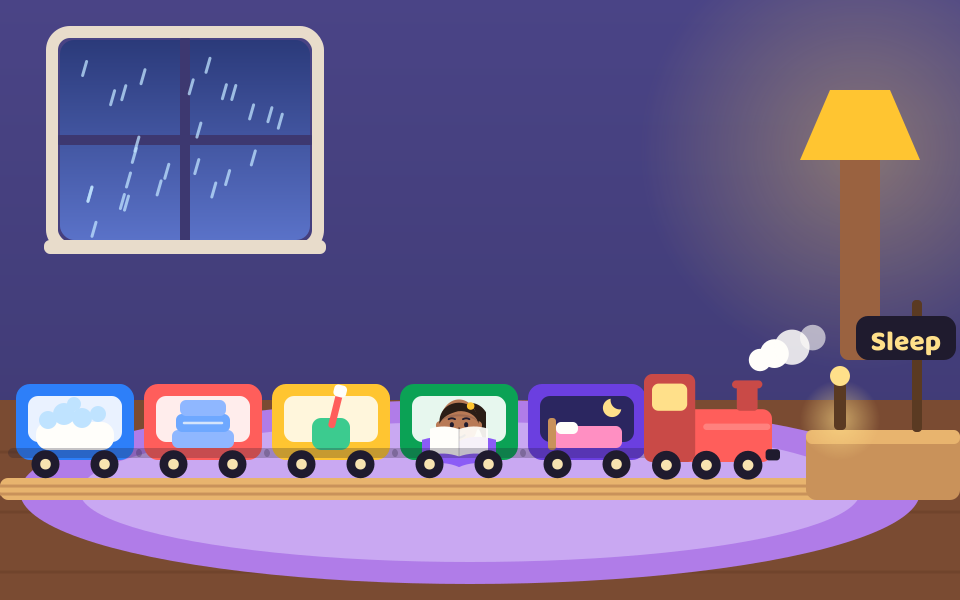
Young children don’t have much sense of time. “Twenty minutes until bed” means very little to them. What they can follow is a pattern. Bath means pyjamas. Pyjamas mean teeth. Teeth mean a story. By the time the book comes out, they’ve had a run of small signals all pointing the same way.
That’s why the same order, night after night, tends to work better than a routine that changes with the day. It isn’t about being strict. It’s about making the evening easy to read.
Fewer battles at the bottom of the stairs
When a child knows what’s coming, there’s less to argue about. The routine itself becomes the reason. “What happens after teeth?” is a far easier conversation than “Because I said so.”
Some families make a simple picture chart of the steps, so a child can see where they are and what’s left. Younger children love moving a peg or a sticker along as they go. It gives them a small sense of being in charge, which takes the heat out of a lot of bedtime tugs of war.
Why the story comes last
There’s a good reason most routines end with a story. A bath can be splashy and loud. Pyjamas can turn into a chase round the landing. The story is the part where everyone sits still, the voice gets quieter and the lights go down.
Putting it last means the calmest thing you do is the last thing your child remembers before sleep. If screens are part of your evening, keep them well before the bath, not after the story, so the end of the day stays quiet.
Keep the order, even when the timing changes
Life gets in the way. There are late swimming lessons, birthday parties, nights at Nana’s and holidays in strange beds. On those nights, it helps to hold on to the order even if you cut every step short. A quick wash instead of a bath, then pyjamas, teeth and one short story still tells a child the same thing: sleep is coming.
That’s also what makes a routine travel well. A child in an unfamiliar room, hearing the same steps and the same last words, has something familiar to hold on to.
The same last words
The very last step deserves a mention of its own. A goodnight that never changes, like “Sleep tight, Grace, see you in the morning”, works as the full stop at the end of the day. Whoever is putting your child to bed, and wherever they are, those words say that everything is as it should be.
It helps if everyone who does bedtime uses the same words, whether that’s Mum, Dad, Grandad or the babysitter. Write them on the picture chart if you have one. A child who hears the same goodnight from a different person still knows exactly where they are in the evening.
You don’t need a perfect routine, or an elaborate one. Three or four steps, done in the same order with the same goodnight at the end, is plenty. Your child will learn the rest by heart.
 Sweet dreams,The BellaBye teamWritten byThe BellaBye teamWe’re a family making bedtime stories for every child, read in the voices they love.