

It usually starts with a small voice from the landing: “Can you leave the door open?” Then it’s the light, then the wardrobe, then the shape on the back of the chair that definitely moved. If your child has suddenly decided the dark can’t be trusted, you’re in very good company. Almost every family meets this at some point, and it nearly always passes.
- Being scared of the dark is a normal part of growing up, and it often arrives as imagination grows.
- Take the feeling seriously, without agreeing that there’s something to be scared of.
- A little light, a steady routine and a calm story can make the dark feel smaller.
Why the dark gets bigger
Many children sleep happily in the dark as babies and then, somewhere in the preschool years, decide it’s full of things. That isn’t a step backwards. It’s a sign their imagination is growing faster than their sense of what’s real. A child who can picture a dragon in a story can just as easily picture one under the bed.
The dark also takes away the things that usually tell a child they’re safe. They can’t see your face, the familiar toys turn grey, and ordinary objects become strange shapes. A dressing gown on a hook is a dressing gown in the day. At night, it can be anything.
Fears often come and go with everything else that’s happening. A new school, a house move, a scary scene glimpsed on someone else’s screen: any of these can bring the dark back to the front of a child’s mind, even after it had settled.
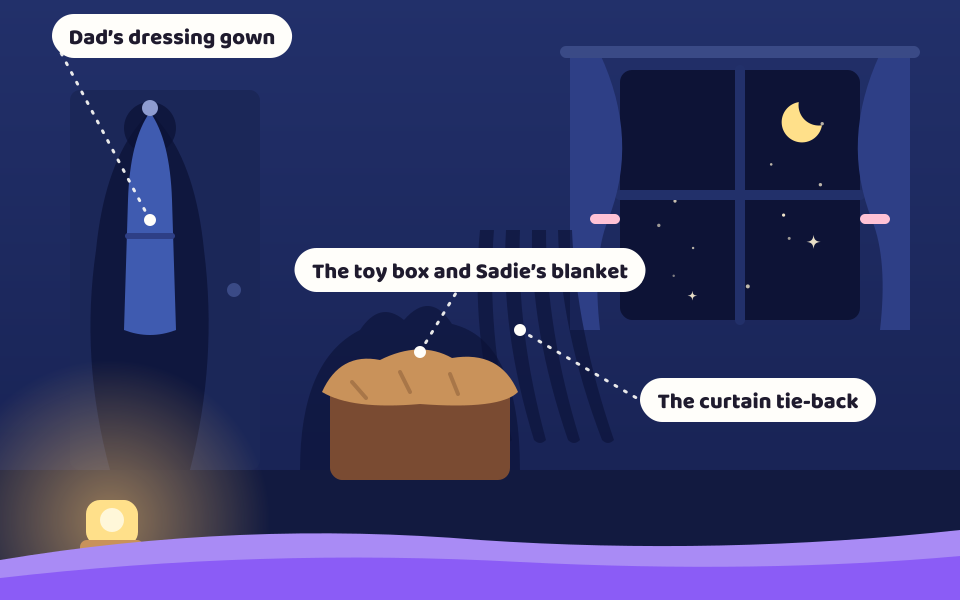
Take the feeling seriously, not the monster
The most natural reply, “There’s nothing there, go to sleep”, is true, but it rarely helps. To a frightened child it can sound like “I don’t believe you”, which makes the feeling bigger, not smaller.
Try naming the feeling instead: “The dark feels scary tonight, doesn’t it?” Then offer what you know: “I checked, and your room is just your room. I’m right downstairs.” You’re agreeing that the fear is real without agreeing that the monster is.
Keep your own voice calm and a little bit boring. Children take their cue from us, and if you’re relaxed about the dark, they slowly learn they can be too. Some families like a playful fix, like a spray that keeps monsters away, but it can quietly suggest the monsters were there all along. Many parents prefer to keep it simple.
“You can’t switch a fear off. You can make the dark a little more familiar.”
The light you leave on
There’s no rule that says a child must sleep in total darkness. A small night light, a landing light with the door left ajar, or a soft glow from the hallway can make the room feel safe enough to settle in. Choose a warm, gentle light rather than a bright white or blue one, and keep it low and out of their eyes.
Some children love having their own torch by the bed. It gives them a way to check for themselves, and a little control goes a long way. Most use it a lot for a week and then forget it’s there.
If you’d like to move towards less light over time, go slowly. Close the door a little more each week, or move the night light a little further from the bed. Tell your child what you’re doing and why, and let them help decide. Changes they’ve agreed to tend to stick far better than ones that happen while they’re asleep.
Screens are best kept out of the last part of the evening. Fast, bright programmes can stir up the very feelings you’re trying to calm, and the glow of a tablet is not the same as the glow of a night light.
Stories that make the dark friendly
Stories are one of the gentlest tools you have. A child who hears about a fox who loves the night, or a girl who goes fishing for stars, starts to picture the dark as a place where good things happen. You’re not lecturing them. You’re giving their imagination something better to do.
Look for stories where the night is cosy and the ending is warm: a moon picnic, a lighthouse keeper, a train that rocks its passengers to sleep. Save the dragons and the dramatic chases for the daytime. At bedtime, the best stories are a little slow, a little sleepy, and finish with everyone safe.
You can tell your own, too. “Once upon a time, there was a girl called Grace who wasn’t sure about the dark…” Children love hearing about someone just like them who felt the same and found a way through.
When it’s more than a phase
For most children, the fear fades over weeks or months, especially with a calm, steady routine. Progress is rarely a straight line. A good week can be followed by a wobbly night, and that’s fine.
Sometimes it’s worth getting a little more help. If fears are keeping your child awake most nights, spilling into the daytime, or seem to be getting worse rather than better, have a word with your GP, doctor or health visitor. The same goes for night terrors, where a child seems awake and very upset but doesn’t respond to you and remembers nothing in the morning. They’re different from ordinary night-time fears, and worth mentioning.
The dark won’t always feel this big. One evening, perhaps sooner than you think, your child will ask for the door closed, or the light off, all by themselves. Until then, a little light, a familiar voice and a gentle story are more than enough.
 Sweet dreams,The BellaBye teamWritten byThe BellaBye teamWe’re a family making bedtime stories for every child, read in the voices they love.