

Children meet a lot of firsts, and most of them arrive before they have the words to talk about them. A story gives them a way in. It lets a child walk through the big day once, safely, tucked up in bed, before they have to walk through it for real.
Why a story helps with the unknown
Much of a child’s worry about a big day comes from not knowing what will happen. Where will I hang my coat? Will it hurt? Will you still love me when the baby comes? Grown-ups fill those gaps with experience. Children fill them with imagination, and imagination at bedtime isn’t always kind.
A story fills in the blanks. It shows what the classroom might look like, that the dentist mostly just counts teeth, that new babies cry and sleep a lot and don’t do much else. When a character a lot like your child gets through the day and comes home safely at the end, the whole thing starts to feel possible. Your child has already been there once, in a way, and the second time is always easier than the first.
Keep it gentle, and keep it true
It’s tempting to oversell. “You’ll love every minute!” is a lovely thing to say, but it’s a promise nobody can keep, and children notice when the real day doesn’t match. A better story is an honest one. The character feels a bit nervous. Something is tricky. Someone kind helps. It ends well.
That shape matters. It tells your child that feeling wobbly is normal, that hard moments pass, and that there are people whose job is to help. It doesn’t pretend there’s nothing to worry about, and it doesn’t dwell on the worry either.
“A good story doesn’t say there’s nothing to worry about. It says: you can do this, and someone will be there.”
Try not to make every bedtime about the big day, though. If the dentist turns up in every story for a fortnight, it can start to feel like a much bigger deal than it is. One or two well-timed stories, mixed in with the usual favourites, are usually plenty.
Timing: not too soon, not too late
Start too early and the big day can loom for weeks. Leave it too late and there’s no time to get used to the idea. Most families find a gentle build-up works best, with the night before kept as ordinary as possible.
- Two weeks beforeMention school in passing, and read a story about someone starting somewhere new.
- One week beforeWalk past the school together and spot one thing they’ll see on the day.
- A few nights beforeA story with your child at the centre, getting through the morning and coming home.
- The night beforeA familiar favourite, the usual routine and the same goodnight words.
- The day afterAsk about one good thing, and let tonight’s story celebrate it.
The same rhythm works for most big days, stretched or squeezed to fit. A dentist visit might need a few days’ notice; a new baby might need a few months, starting slowly as the bump grows.
Different big days, different stories
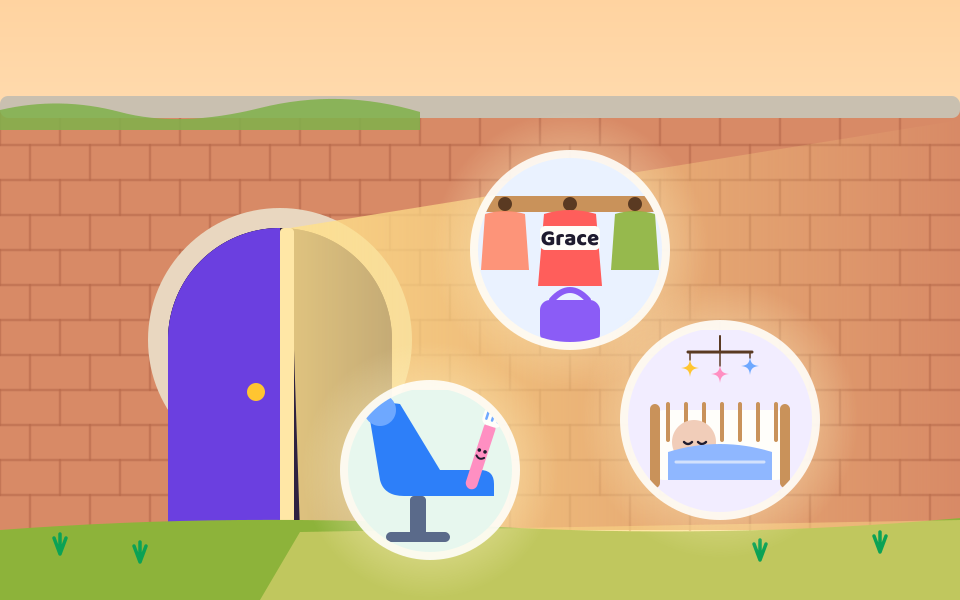
Every big day has its own small details that a child is likely to wonder about. The more of those a story covers, the less there is left to imagine.
Wherever you can, use your child’s real details: the name of their new teacher, the colour of the new front door, the toy that’s coming with them. Familiar details make the new thing feel a little less strange, and they help a child picture themselves in the story rather than watching someone else.
Let your child add to the story, too. Ask what the character might pack in their bag, or what they’d say to the new baby, or which toy should hold their hand in the waiting room. Children often tell you what’s really on their mind this way, through the character rather than about themselves. If the hero keeps worrying that nobody will come back at home time, that’s a small clue worth noticing, and a chance to answer it plainly: “Someone always comes back. I’ll be right there by the gate.”
Play helps in the same way during the day. A teddy can go to the dentist on the kitchen table, or start school at the bottom of the stairs. By the time the story comes round at bedtime, the big day already feels a little more familiar.
After the day itself
Once the big day has happened, it’s worth marking it. Ask about one good thing, rather than firing a list of questions at a tired child at the school gate. Bedtime is often when the real answers come out anyway, once the lights are low and nobody is in a hurry.
Some feelings take a while to show. The novelty of a new baby can wear off after a few weeks, and that’s often when an older child needs the most reassurance. A second week at school can feel harder than the first, once the excitement has gone. Keep the gentle stories going for as long as they’re helping, and let them fade out on their own.
If worries hang on for weeks, or start to get in the way of sleep, eating or play, have a chat with your GP, doctor or health visitor.
Big days are part of growing up, and your child won’t remember most of them. What they may remember is the feeling of being ready, and of having someone beside them at bedtime who helped them get there.
 Sweet dreams,The BellaBye teamWritten byThe BellaBye teamWe’re a family making bedtime stories for every child, read in the voices they love.